W.01
Specification before price
A number quoted against an unclear requirement is not useful to either side. We establish what is actually needed first, then talk commercially. It is slower by one message and faster by several weeks.
Seat Belt Vendor exists to make one thing easier: arriving at the correct seat belt specification for a defined vehicle, seating position and duty cycle — and being able to explain why it is correct.
Our purpose
Most seat belt enquiries begin with a part number or a photograph and end in a guess. The information that would settle the question — anchorage arrangement, seating position, retractor behaviour, webbing length, buckle family — is rarely gathered in one place. This platform sets out that information plainly so a buyer can specify with confidence instead of ordering and hoping.
Workshops, fleet operators, body builders, vehicle converters, institutional transport managers and trade buyers all need different things from the same product category. A fleet needs repeatability across a mixed vehicle list. A converter needs an anchorage conversation before a parts conversation. A workshop needs a clean like-for-like match and a fast, unambiguous answer. We work to the buyer’s actual question.
A seat belt is not a consumable and it is not an accessory. It is a load-bearing safety component whose behaviour depends on geometry and on the structure it is bolted to. Everything on this site is written on that basis — including the parts that tell you to stop and involve a qualified professional.
You will not find invented certifications, borrowed client logos, fabricated testimonials or made-up production figures here. Where we can give useful technical and commercial information, we do, in depth. Where a claim would require credentials we cannot substantiate, we leave it out. That is a deliberate position, not an omission.

Fig. 01 — The belt in use is the only test that mattersRef / USE
Understanding requirements
“I need a rear seat belt” is a description. It cannot be quoted against and it cannot be checked. A requirement, by contrast, is a short list of facts: the vehicle and its variant, the exact seating position and its handing, whether the anchorages are on the body or on the seat frame, the belt configuration, the retractor behaviour, and the working length needed.
Once those facts exist, most of the ambiguity disappears. The remaining questions are usually about availability, lead time and whether an original-configuration part or a suitable equivalent is appropriate — which are commercial questions, and much easier to resolve than technical ones.
A large part of what this site does is help a buyer convert a description into a requirement before an enquiry is even sent. The Buyer’s Guide is that process written out step by step.
Why application-specific selection matters
Take one nominal specification — a three-point retractable belt — and put it into four operating contexts. The dominant selection concern changes every time.
| Context | Dominant concern | What usually goes wrong | What to confirm first |
|---|---|---|---|
| Private car, rear outboard | Exact geometry match to the body shell | Handing reversed, or a part from a different generation of the same model | Variant, model year, market and the handing of the position |
| Commercial vehicle, driver seat | Seat-integrated anchorage and long webbing run | Body-mounted assembly fitted to a suspended seat, changing geometry with travel | Whether the anchorage is on the seat frame or the cab structure |
| Bus or coach saloon | Consistency across the whole seating plan | Mixed assemblies across a saloon, making inspection and stock unreliable | The approved seat model that carries the anchorage load |
| Off-highway plant | Contamination resistance and field serviceability | A delicate retractor specified where a static belt would survive better | Environment, exposure and how the belt will actually be inspected |
A vendor-focused approach
W.01
A number quoted against an unclear requirement is not useful to either side. We establish what is actually needed first, then talk commercially. It is slower by one message and faster by several weeks.
W.02
Photographs of the existing assembly and its anchorages, any markings on the webbing or retractor, and the vehicle identification number carry more weight than a written description. We would rather ask for one more photograph than assume.
W.03
Where something is straightforward, we say so. Where it depends on a check that has not been made yet, we say that too — and tell you what the check is.
W.04
We are a sourcing and information platform for seat belt systems and related restraint components. We do not present ourselves as a manufacturer, a test house or a certifying body, because we are not.
W.05
Fleet and volume requirements are treated as a programme rather than a single order: which positions, which vehicles, what replacement cadence, and how specification stays consistent as the fleet changes.
W.06
Where a question touches anchorage integrity, structural modification or the suitability of a belt for a converted vehicle, the right answer is a qualified professional assessment — and we will say so rather than sell around it.
Supporting better product decisions
A well-informed buyer is easier to serve and ends up with a better outcome. That is the entire reasoning behind the depth of content on this site. The category pages are not marketing filler — they are the reference material we would otherwise have to send separately on every second enquiry.
The Seat Belt Solutions pages explain each configuration and what distinguishes it. The Applications pages explain why requirements shift between vehicle classes. The Buyer’s Guide converts all of it into a working sequence, and Quality & Safety sets out the limits — what should be inspected, what should not be modified, and when a professional needs to be involved.
Safety content invites exaggeration, and exaggeration is unhelpful when the subject is a load-bearing component. Our position is simple and applies to every page here:
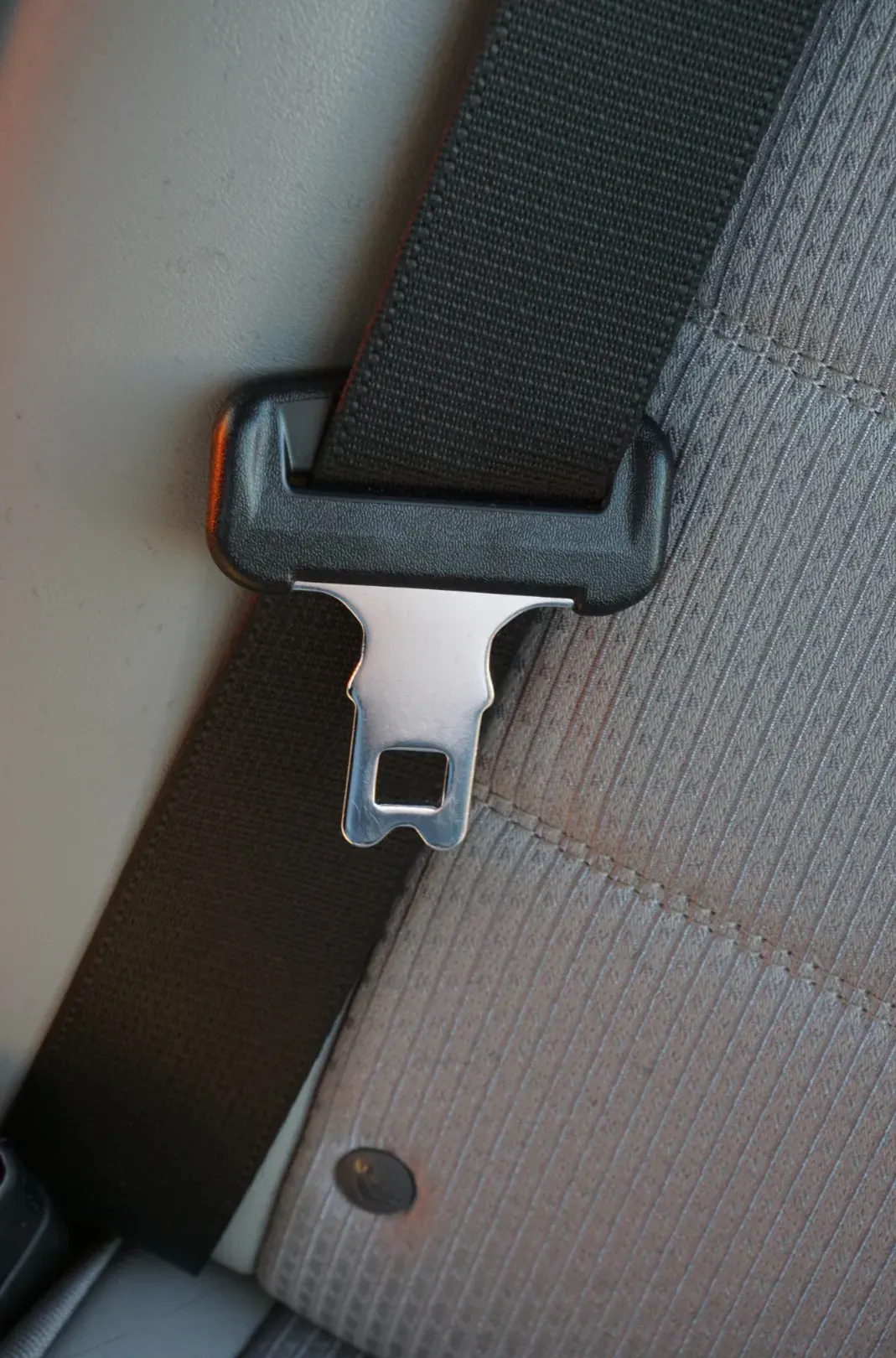
Fig. 02 — Webbing, guide and latch plateRef / CMP-02
Scope of information on this site
Content published on seatbeltvendor.in is general informational guidance about seat belt systems and their selection. It does not replace applicable vehicle specifications, manufacturer instructions, statutory requirements, or assessment by a qualified professional. Where a decision affects occupant safety, the applicable vehicle documentation and a competent professional take precedence over anything written here.
Get in touch
Send the vehicle details, the seating position and photographs of the existing anchorages. We will work back to a specification with you.