+91 97699 99960 im@digantsharma.com

Nine vehicle
classes.
Nine problems.

A seat belt requirement is defined by the vehicle it lives in. This page walks through the vehicle classes we are asked about most, and what changes between them.

Classes covered — 09 Variation drivers — 06
01

Variation drivers

Why requirements
change at all

Six factors account for almost every difference between one seat belt requirement and another. Work through them and the vehicle class largely explains itself.

Driver 01

Vehicle architecture

Where the structure can carry restraint loads decides where anchorages can exist. A pillarless layout, a high floor, a chassis cab or a monocoque all present different options, and those options set the belt configuration before anything else is decided.

Driver 02

Seating position

Front, second row, third row, outboard, centre, forward-facing, side-facing or jump seat. Each position has its own geometry, its own handing and often its own retractor behaviour, even within the same vehicle.

Driver 03

Occupant use

Who uses the position, how often, in what clothing, and whether a child restraint will ever be installed there. This drives working length, adjuster requirements and whether an automatic-locking retractor mode is needed.

Driver 04

Mounting arrangement

Body-mounted, seat-integrated, or a combination. This is the single most decisive factor in whether a given assembly can be used at all, and it is the one most often assumed rather than checked.

Driver 05

Belt configuration

Two-point or three-point, retractable or static, and where a retractor is fitted, whether it is emergency-locking, automatic-locking or switchable. The configuration follows from the architecture and the position, not from preference.

Driver 06

Operational environment

Dust, moisture, chemicals, heat, sunlight, vibration and cycle count. These determine how fast an assembly degrades, how often it should be inspected, and sometimes whether a simpler mechanism is the better engineering choice.
02

By vehicle class

Applications
in detail

APP / 01 — Hatchbacks, sedans, estates

Cars

The most variant-sensitive category on this page. Belt hardware is packaged around a specific body shell and changes across generations, facelifts, trim levels and regional variants of the same nameplate. A car belt that bolts up is not evidence of a match.

Front positions almost universally carry three-point belts with emergency-locking retractors, and on most modern cars a pretensioner and load limiter within the retractor housing. Rear outboard positions follow the same architecture with shorter runs; the rear centre position is the one that varies most, ranging from a simple lap belt on older vehicles to a full three-point fed from a roof-mounted or seat-back-mounted retractor.

What changes here

  • Retractor housing shape and trim interface
  • Buckle stalk length and console clearance
  • Presence of a height adjuster at the upper anchorage
  • Connector type for belt-status and pretensioner circuits

Specify with

  • Vehicle identification number
  • Row, side and drive-hand
  • Photographs of both anchorages and the buckle stalk
  • Any part markings on the retractor or webbing label

SUVs share car architecture but add height, a longer cabin and frequently a third row. The extra ride height changes the angle at which the diagonal crosses the shoulder, and taller B-pillars mean upper anchorage height adjusters are more common and more important. Third-row positions bring their own geometry entirely, often with belts fed from the C- or D-pillar or built into the seat back itself.

What changes here

  • Longer webbing runs, especially in the third row
  • Folding and tumbling seats that route the belt differently when stowed
  • Height adjuster travel becomes more significant
  • Load-space conversions may block original belt routing

Specify with

  • Seat configuration — five, six or seven seat
  • Whether the row folds, tumbles or removes
  • Third-row access side, which affects handing
  • Any aftermarket seating or load-area modification
APP / 02 — Five to seven seat

SUVs

Higher, longer and often three rows deep. The extra dimensions change belt geometry in ways that are easy to underestimate when ordering from a model name alone.

APP / 03 — Panel, crew & minibus

Vans

One base vehicle, many completely different interiors. A panel van, a crew van and a minibus conversion of the same model can have entirely unrelated belt requirements.

The front bench is the recurring question here: a three-abreast front row usually combines outboard three-point belts with a centre position that may be lap-only or three-point depending on whether the seat frame carries an upper anchorage. Behind the bulkhead, everything depends on what the converter installed — and converted seating rarely matches the base vehicle’s original arrangement.

What changes here

  • Front centre position configuration varies widely
  • Rear seating is frequently converter-supplied, not factory
  • Seat-integrated belts are common in rear rows
  • Bulkheads and racking can obstruct belt routing

Specify with

  • Base vehicle plus the conversion or body builder if known
  • Whether the seat is factory or aftermarket
  • Photographs of the seat frame anchorage points
  • Number of positions in each row
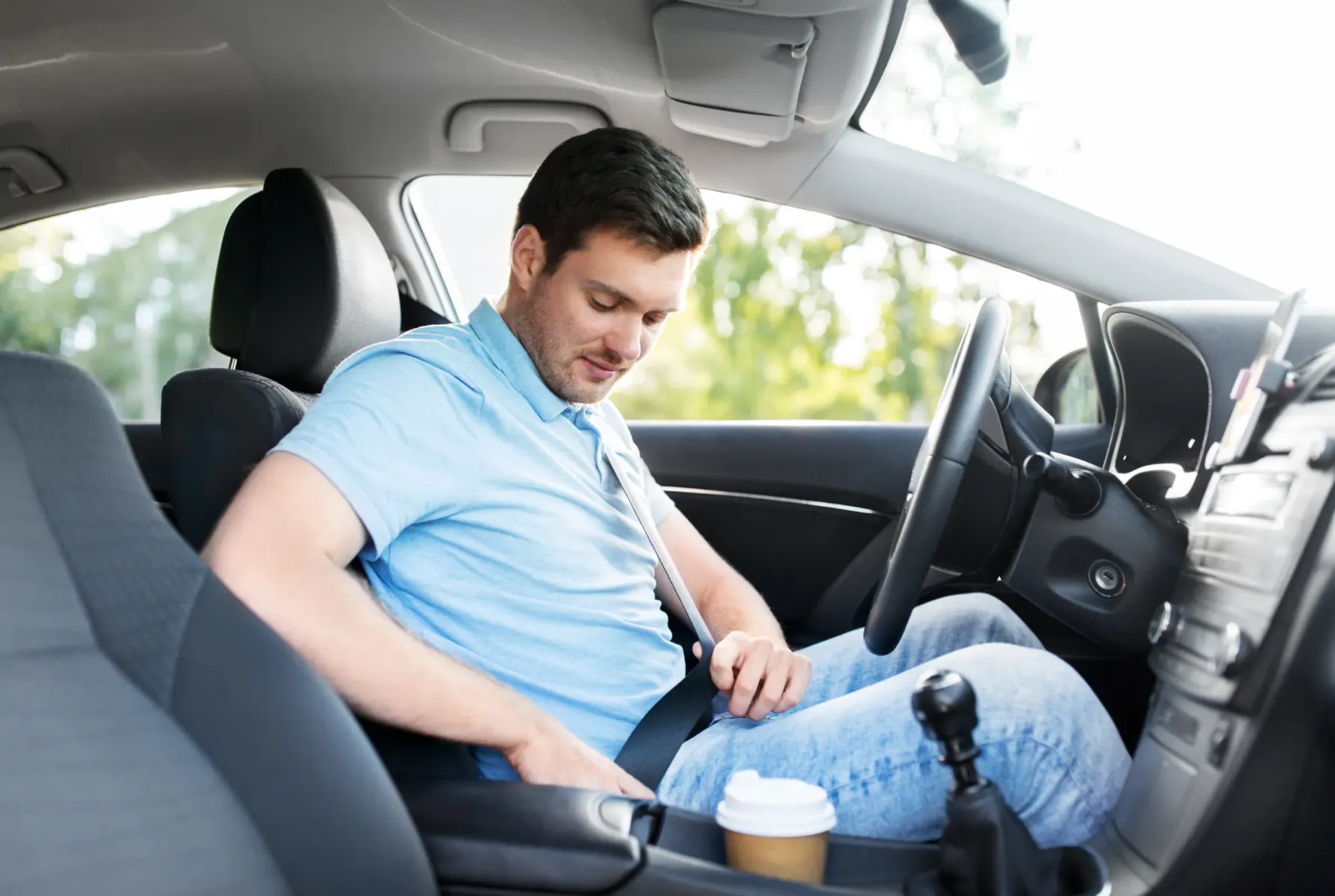
A driver in a passenger car reaching down to fasten the three-point seat belt buckle beside the seat cushion

Fig. 01 — Passenger vehicle driver position, three-point retractable beltRef / APP-01

In most modern bus and coach seating, the belt is part of the seat, not part of the vehicle body. The approved seat frame carries the restraint load down into the floor rail, which means belt selection follows the seat model rather than the chassis. Getting this wrong is one of the more consequential errors in this category, because a body-mounted assembly bolted to a seat frame changes the entire load path.

What changes here

  • Anchorage load is carried by the seat, not the body side
  • Both two-point and three-point layouts appear, per seat approval
  • Saloon-wide consistency matters for inspection and stock
  • Replacement is usually a programme, not a single part

Specify with

  • Seat manufacturer and seat model
  • Number of positions and the seating plan
  • Whether belts are aisle-side, window-side or both
  • Existing belt markings and mounting hardware photographs
APP / 04 — Coach & service

Buses

Where the seat is the structure. Specification starts from the approved seat model, not from the vehicle.

APP / 05 — LCV, rigid, tractor unit

Commercial vehicles

High cycle counts, suspended seats and cab structures that behave nothing like a car body. Fleet buyers usually need repeatability as much as they need a single part.

The defining question is whether the driver’s belt anchors to the cab or to the seat. Air-suspended seats move several centimetres through their travel; if the belt anchored to the cab, its geometry would change every time the seat moved. Seat-integrated assemblies solve this, and they must be specified against the seat, not the truck. Passenger and crew positions in the same cab may follow entirely different rules.

What changes here

  • Seat-integrated versus cab-mounted anchorage
  • Longer webbing runs and heavier anchor fittings
  • Wear rates driven by daily cycle count, not vehicle age
  • Belt-status signalling into tachograph or telematics systems

Specify with

  • Cab model and seat make and model
  • Whether the seat is air-suspended or mechanically sprung
  • Number of vehicles and positions in the programme
  • Target replacement cadence across the fleet

This segment tends to replace on schedule rather than on failure, and to work to internal safety policy alongside statutory requirements. That changes what matters commercially: availability of matching parts over a multi-year programme, ease of visual inspection by non-specialist staff, and consistency across a whole vehicle so that a driver’s pre-journey check is quick and unambiguous.

What changes here

  • Planned replacement cycles rather than reactive replacement
  • Inspection is often carried out by drivers, not technicians
  • Consistency across the saloon simplifies daily checks
  • Records and traceability carry real weight

Specify with

  • Seat model and the number of positions per vehicle
  • Fleet size and the intended replacement interval
  • Whether a single specification must cover mixed vehicles
  • Any internal policy requirement the belt must satisfy
APP / 06 — School & campus

School & institutional transport

Programme buying, planned replacement and inspection routines carried out by people who are not technicians.

APP / 07 — Site, service & welfare

Utility vehicles

Pickups, site vehicles, service bodies, welfare units and mobile workshops — usually converted, frequently modified again after delivery.

The recurring issue in this category is that the vehicle as it stands rarely matches the vehicle as it left the factory. Crew cabs gain seating, load beds gain bodies, and welfare units add positions the base vehicle never had. Every one of those additions is an anchorage question first. Where a position exists that the manufacturer never provided, the structure has to be assessed by someone competent to do it before any belt is selected.

What changes here

  • Converted seating positions with non-standard anchorage geometry
  • Exposure to dust, water and site contamination
  • Mixed original and converter-supplied hardware in one vehicle
  • Belts routed around racking, bulkheads and equipment

Specify with

  • Base vehicle and the body builder or converter
  • Measured distances between the intended anchorages
  • Photographs of the actual mounting brackets
  • Who has assessed or will assess the structure
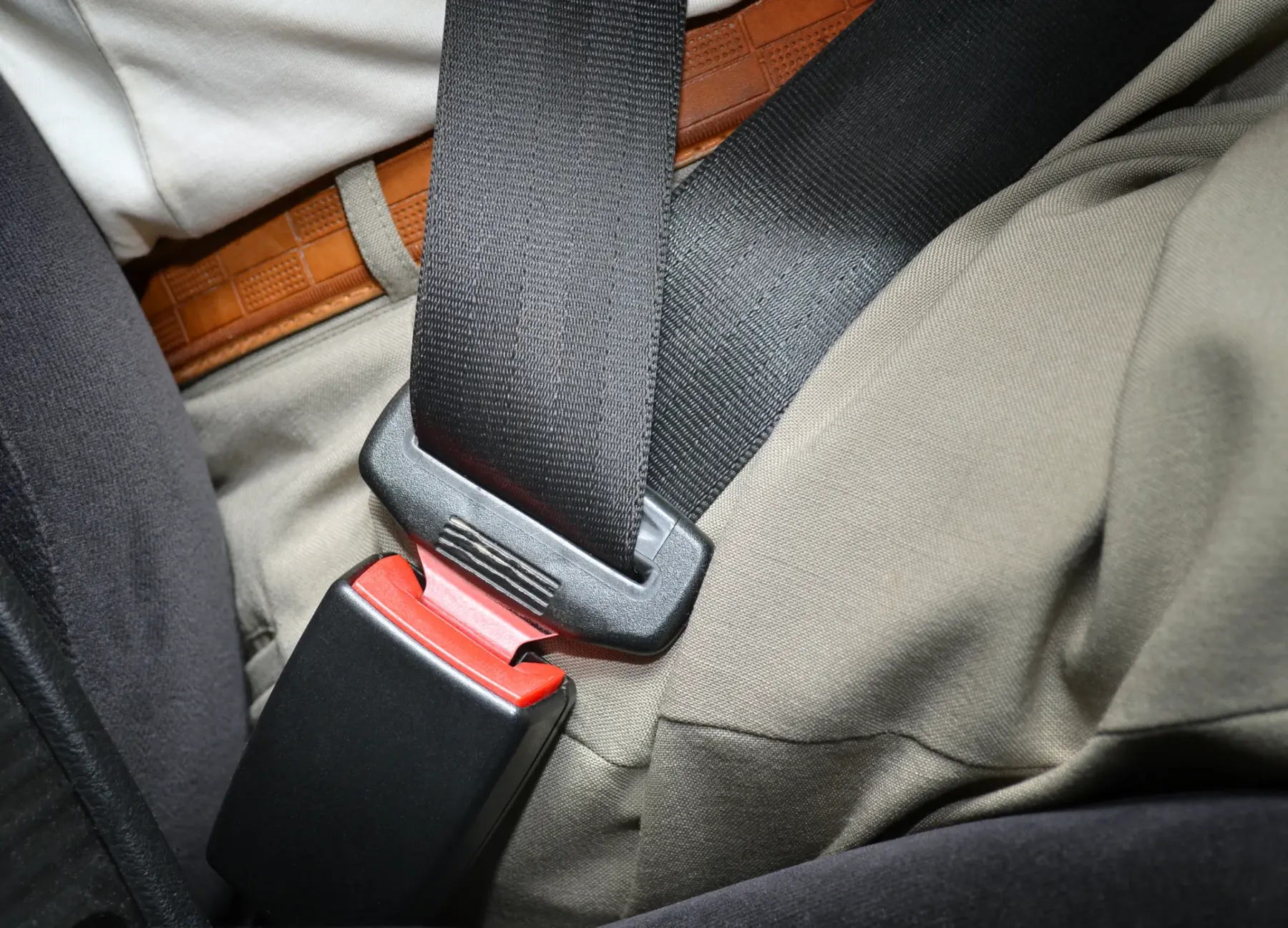
A fastened three-point seat belt across the lap and chest of a seated occupant in a working vehicle cabin

Fig. 02 — Belt fastened in service; lap section sitting low across the pelvisRef / APP-05

On plant and machinery the restraint is often working alongside a rollover protective structure, and its primary job is keeping the operator inside the protected zone. That is a different design intent from frontal-impact restraint in a road vehicle, and it is why simple static lap belts remain common: they tolerate contamination, they can be inspected in seconds, and they can be replaced in the field without specialist tooling.

What changes here

  • Contamination is the dominant degradation mechanism
  • Static lap belts are frequently the correct choice
  • Belts may be tied into a seat-occupancy interlock
  • Field serviceability outranks convenience

Specify with

  • Machine make, model and seat type
  • Measured belt length on the machine
  • Whether an interlock switch is fitted
  • Working environment and inspection interval
APP / 08 — Plant & off-highway

Industrial vehicles

Forklifts, loaders, excavators and agricultural machinery, where the belt works with the protective structure rather than against a crash pulse.

APP / 09 — Accessible & purpose-built

Specialised seating applications

Wheelchair-accessible vehicles, patient transport, marine and rail seating, and any layout built for a defined purpose rather than a production line.

These requirements are resolved by measurement. Anchorage positions, the angle the belt must leave each anchorage at, the working length, and the occupant’s specific needs all come from the actual installation. It is also worth being clear that wheelchair tie-down and occupant restraint are two separate systems with two separate jobs; a belt that secures a chair is not an occupant restraint, and vice versa.

What changes here

  • Geometry comes from the conversion, not the donor vehicle
  • Occupant restraint and equipment tie-down are distinct systems
  • Bracketry may need designing alongside the belt
  • Documentation and sign-off are part of the deliverable

Specify with

  • Measured anchorage-to-anchorage distances
  • Anchorage angles and available bracket faces
  • Details of the conversion and who signs it off
  • Any accessibility requirement affecting buckle operation
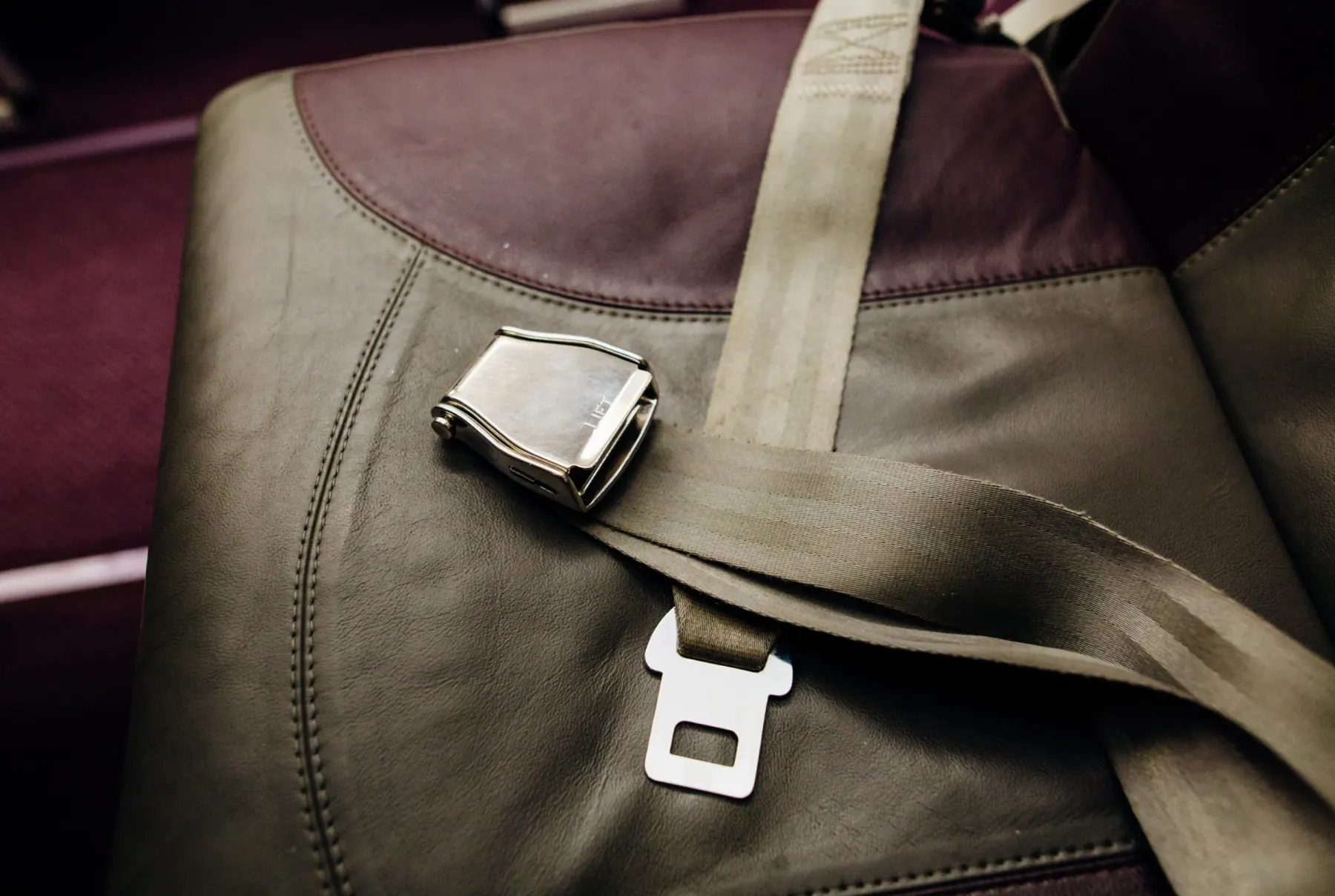
A metal lift-lever lap belt buckle and matching latch plate resting on a leather passenger seat in a specialised transport setting

Fig. 03 — Lift-lever lap belt assembly used in specialised passenger seatingRef / APP-09

03

At a glance

The one question that decides each class

Decisive question by vehicle class
Vehicle class Usual configuration Decisive question
CarsThree-point, ELR, often with pretensionerExact variant, model year and handing
SUVsThree-point across up to three rowsSeat configuration and whether the row folds or tumbles
VansMixed; converter-supplied rear seating commonIs the seating factory or converter-installed?
Buses & coachesSeat-integrated two-point or three-pointWhich approved seat model carries the anchorage?
Commercial vehiclesThree-point, frequently seat-integratedCab-mounted or seat-mounted anchorage?
School transportSeat-integrated, replaced on a scheduleWhat cadence and what fleet consistency is required?
Utility vehiclesMixed original and converted positionsHas the converted structure been assessed?
Industrial vehiclesStatic lap belt, heavy-duty adjusterWhat is the contamination exposure?
Specialised seatingBuilt to measured geometryWhat are the measured anchorage distances and angles?

Take this into the Buyer’s Guide

Application enquiries

Not sure which class
your vehicle falls into?

Converted, rebodied and mixed-fleet vehicles rarely fit neatly into one category. Describe what you have and we will work out which rules actually apply.